A hardware manufacturer that also leases equipment under multi-year contracts and layers a SaaS subscription on top of the hardware came to us after a first-pass nexus review — run off a single combined revenue-by-state total — flagged what looked like real economic nexus exposure in six states. Before spending real money on registration, back-tax estimates, or outside legal opinions, they needed to know which of those six actually held up under each state's own specific rules, not a generic $100K-or-$500K threshold applied uniformly.
Business Background
The company's revenue mix — hardware sales, equipment leases where title stayed with the company, R&D and services revenue, and SaaS subscription revenue — is exactly the kind of hybrid model that a single "sales by state" pivot table cannot correctly evaluate, because different states count different pieces of that mix toward their economic nexus threshold. The original review had treated every dollar as equally countable everywhere, which is not how any state's statute actually works.
Key Challenges
- A single combined revenue-by-state total, with no split between hardware, lease, services and SaaS revenue
- One assumed measurement period (a rolling 12 months) applied uniformly, when several flagged states use a strict prior-calendar-year lookback instead
- Distributor and resale revenue left inside every state's total, when several states specifically allow it to be excluded
- Physical nexus from owned equipment sitting in customer facilities never checked, despite it overriding any economic-nexus timeline entirely
- Customer exemption status — public university, school district, nonprofit hospital accounts — never verified against actual certificates on file
Impact
Registering in a state that was never actually required wastes real compliance cost, ongoing filing obligations, and legal fees on a non-problem. Missing a state where physical nexus was already live for months, on the other hand, is a real exposure quietly accruing penalty and interest the whole time the economic-nexus timeline said "not yet." Getting this wrong in either direction has a real cost; the company needed the correct answer, state by state, not a conservative guess in either direction.
Requirements & Expectations
- Revenue split by type before any threshold was applied, since several states only count tangible-property revenue
- Each state's actual measurement period checked individually, not assumed uniform
- A determination of whether distributor and resale volume counted toward each state's specific threshold rule
- A physical-nexus check on every state where owned, leased-out equipment sat inside a customer facility
- A review of lease agreements for bargain purchase options that could trigger disguised-sale recharacterization
- Verification that customer-type exemptions were backed by actual certificates on file, not assumed from the customer's name
Strategic Approach
We treated this as a sequence of state-specific tests, applied in the order most likely to change the outcome fastest: split revenue by type first, since that alone can remove a state from the list before any other analysis is needed; check physical nexus early, since it can override an economic-nexus timeline entirely and change the urgency of everything downstream; and verify customer exemptions last, since that step reduces exposure within states that remain on the list rather than removing states from it.
Comprehensive Solution
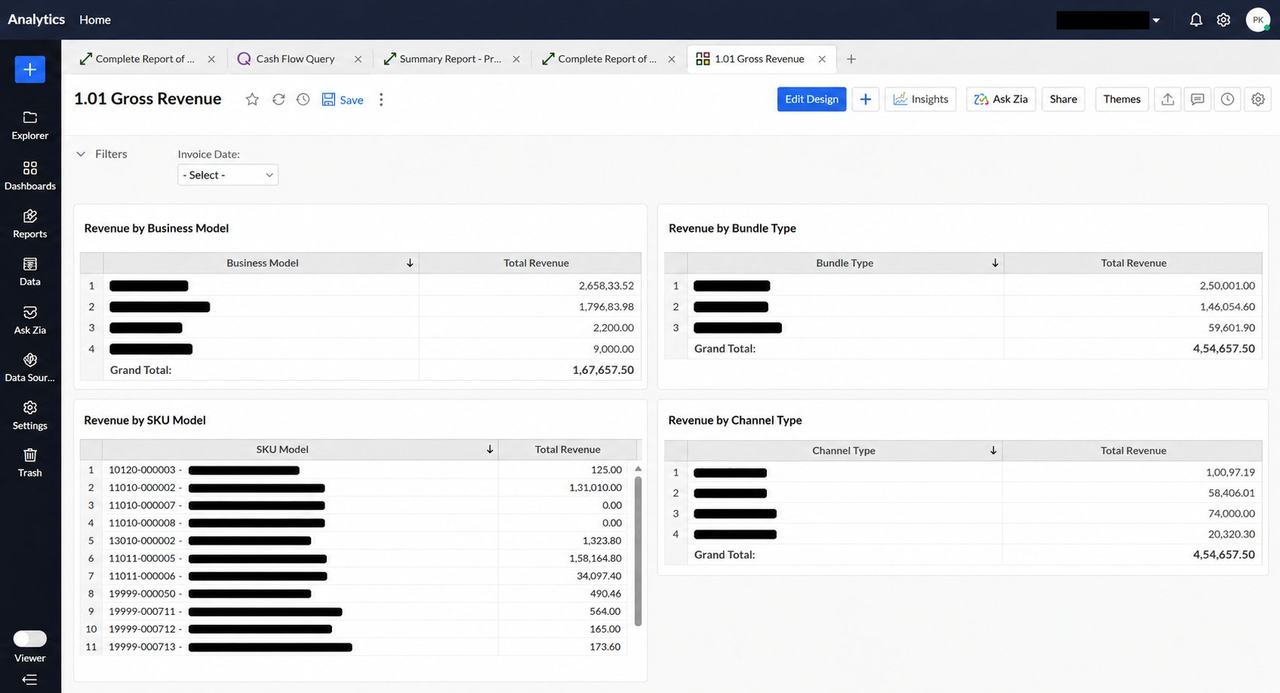
- Split revenue by type before touching any threshold. Hardware, lease, services and SaaS revenue were separated first, because several states only count tangible-property revenue toward their threshold — one state's "breach" turned out to be entirely R&D services revenue that state doesn't count at all.
- Checked each state's actual measurement period, rolling 12 months versus a strict prior-calendar-year lookback, rather than assuming one uniform window across every state on the list.
- Determined whether distributor and resale volume counted toward each state's threshold. Some states exclude resale sales entirely; others count them regardless of whether tax was due. One state's apparent breach was almost entirely distributor volume that state specifically allows to be excluded.
- Checked for physical nexus from owned equipment sitting in customer facilities before finishing the economic-nexus timeline. Leased units where title stayed with the client created physical presence nexus from the day of delivery — no threshold, no lookback — and in several states this had already been live for months.
- Reviewed lease agreements for bargain purchase options that could trigger a disguised-sale recharacterization, changing not just whether tax applied but when, and on what amount.
- Verified customer-type exemptions for public university, school district and nonprofit hospital accounts, confirming state-issued exemption certificates were actually on file rather than assumed from the entity's name.
Measurable Results
Key Takeaway: a nexus review run off one combined "sales by state" number will always overstate exposure in a hybrid revenue business, because it can't see the exclusions the states themselves allow. The fix isn't a bigger spreadsheet — it's applying each state's own definition of a taxable sale before you ever get to the threshold number.
Client Impact
For the finance team
Went from a six-state exposure estimate they couldn't fully defend to a two-state position they could, with every figure traced to a specific statute or published guidance.
For leadership
Avoided registering, and taking on ongoing compliance cost, in states that were never actually required — while catching the physical-nexus states that genuinely were live months earlier than the economic-nexus timeline suggested.
For legal counsel
Received a state-by-state position with sourced reasoning behind each conclusion, rather than a blanket recommendation to register everywhere the first-pass review had flagged.
Conclusion
Hybrid revenue models — hardware, leasing, and software together — break generic nexus rules of thumb in specific, predictable ways. The fix is patient, state-by-state work, not a bigger spreadsheet or a more conservative blanket assumption in either direction.
Selling hardware, leasing equipment, or layering SaaS on top — and unsure which states actually require registration?
We can tell you, state by state, what actually applies to your revenue mix before you spend on registration you may not need.
Talk to an Expert → Book a Call Today →